OSneo —
ERP Dashboard
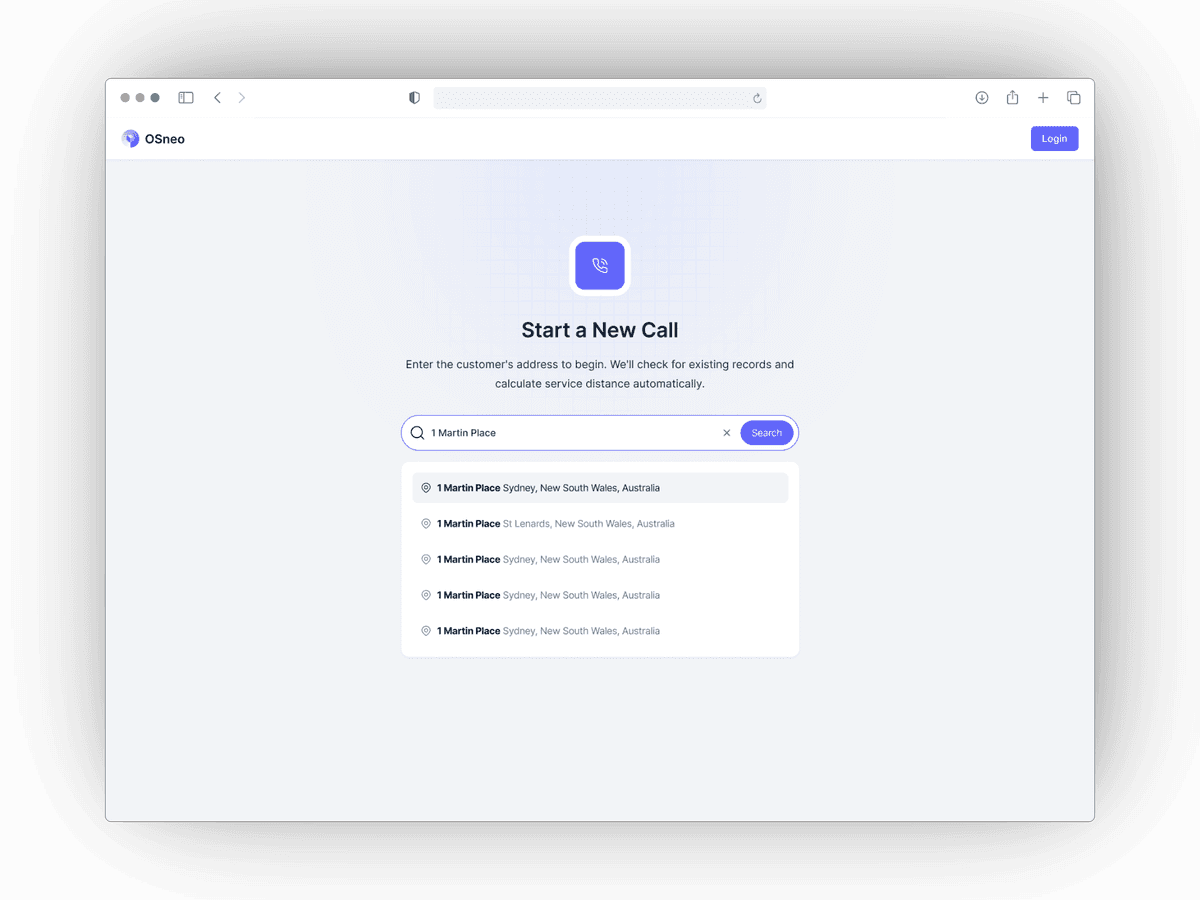
Built a centralized web-based ERP dashboard to unify dispatch, ticket management, and live field team tracking for a growing field services company.
Year
2024
Industry
Field Services / Maintenance
Client
OSneo
Duration
3 months

01 —Problem
Too many tools, zero visibility
The company was running on a patchwork of software — tickets in one place, technician records somewhere else, job updates buried in phone calls and chat threads. Nobody had a clear picture of what was happening in the field at any given moment.
It worked, barely, when the team was small. But as they took on more clients and more technicians, that patchwork started falling apart. Jobs were getting missed, dispatchers were constantly playing catch-up, and there was no easy way to know if a technician was available, nearby, or already overloaded.
02 —Agitation
Scaling made everything harder
The frustrating part was that the business itself was doing well — more demand, more team members, more jobs. But every bit of growth just added more noise to an already messy system. Dispatchers were spending half their day just trying to figure out where people were.
Without a single place to see open tickets, track who's assigned to what, or estimate when a job would wrap up, making good decisions in real time was nearly impossible. The tools weren't built for this kind of scale, and it showed.
03 —Solution
One place for everything
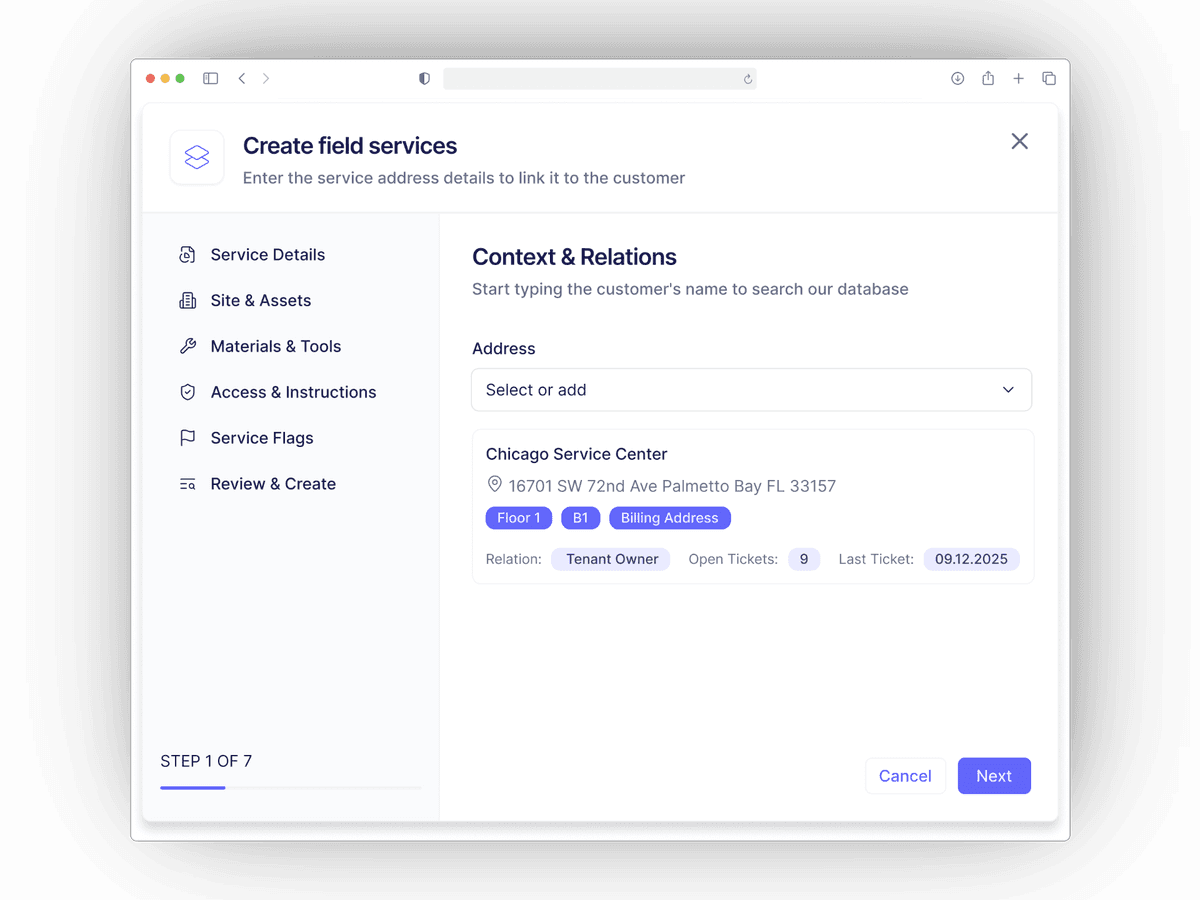
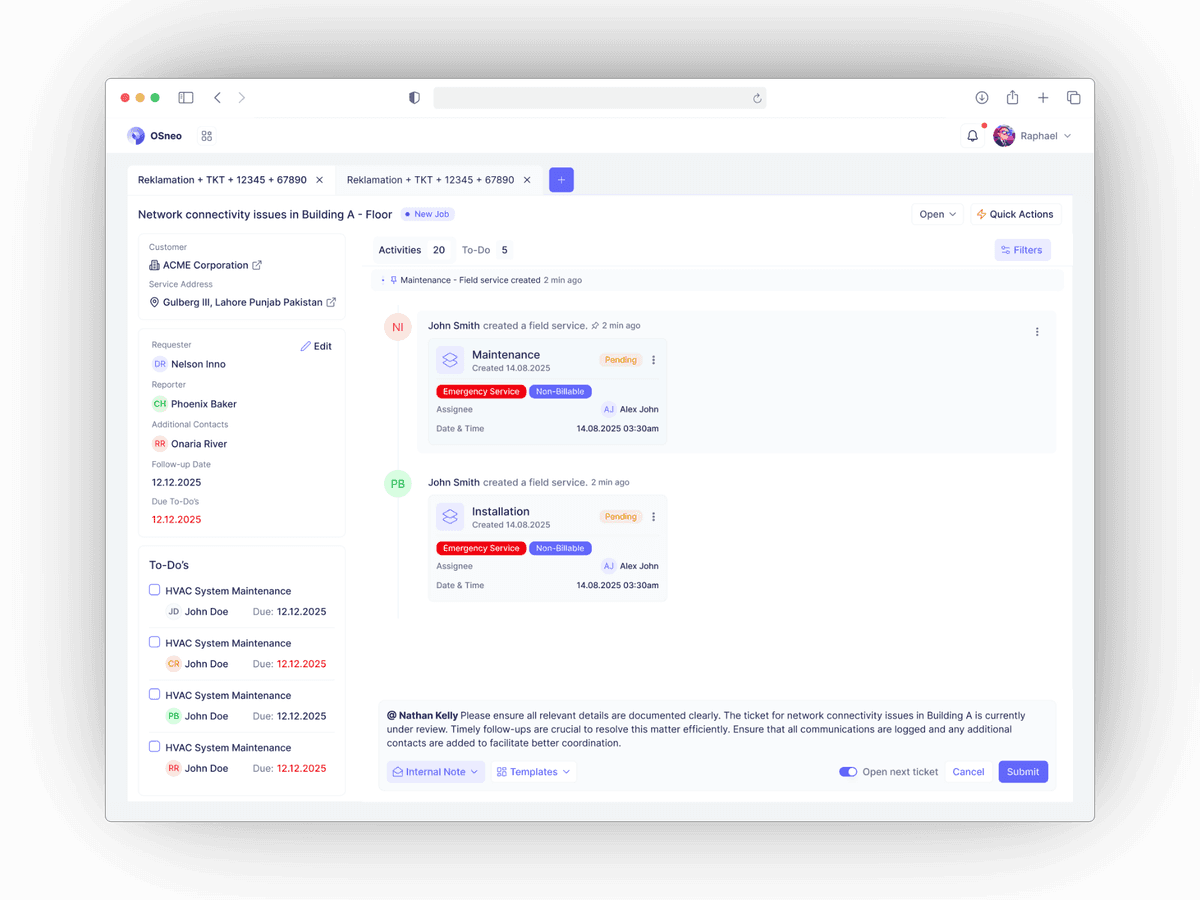
I built out the frontend for OSneo — a web dashboard that brought everything under one roof. Dispatchers could now create and manage tickets, assign technicians, and follow a job all the way through to completion, all while staying synced with the mobile app the field teams were already using.
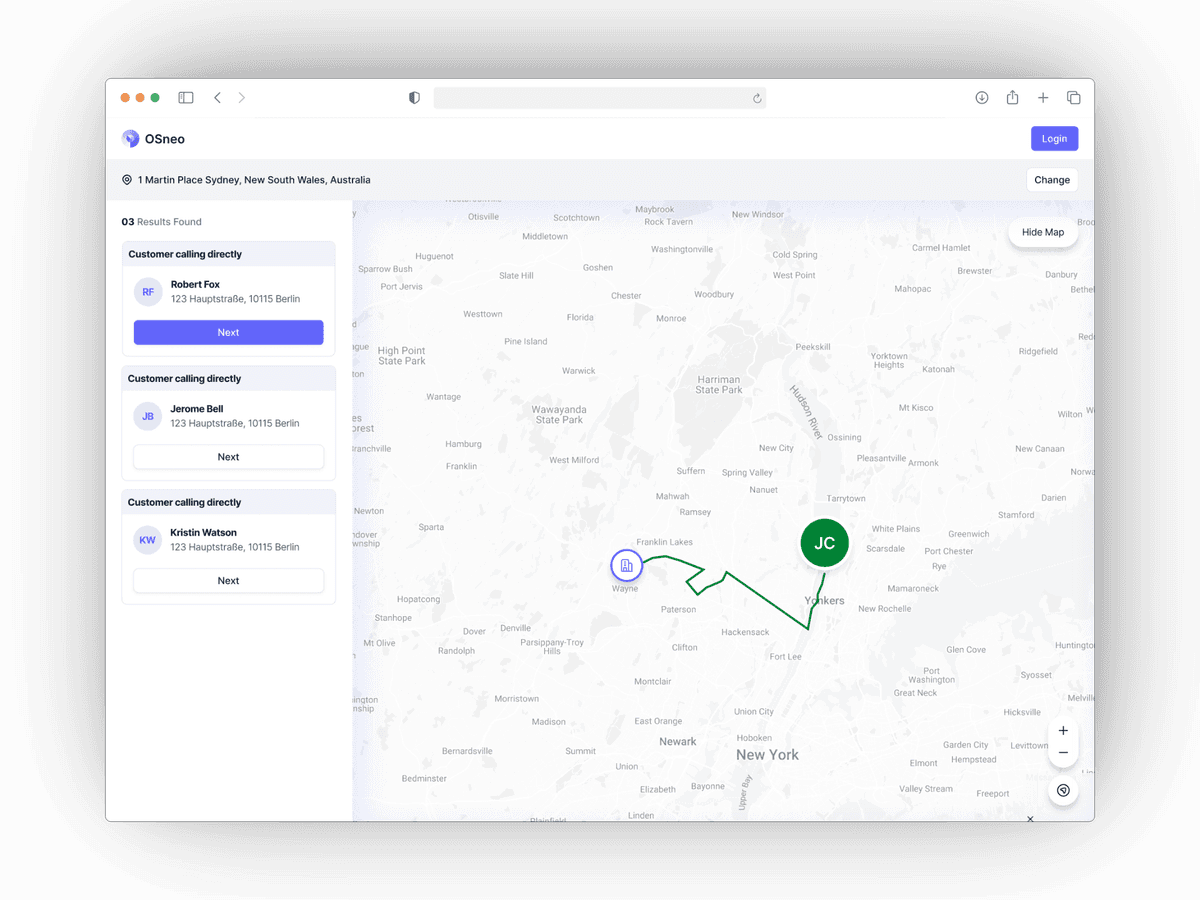
The Google Maps integration was the piece that really changed how dispatch worked — being able to see routes and get ETA estimates meant smarter assignments, less back-and-forth, and fewer surprises. Add role-based access on top of that, and each person on the team only saw what they actually needed to see.
04 —Summary
Ready for what comes next
What started as a fragmented mess of tools turned into a clean, scalable operation. The team can take on more volume now without things falling through the cracks — and that's really what the whole thing was about.